Find an Installer

Blog
June 1, 2026
Why Pool Color Looks Different Once the Water’s In
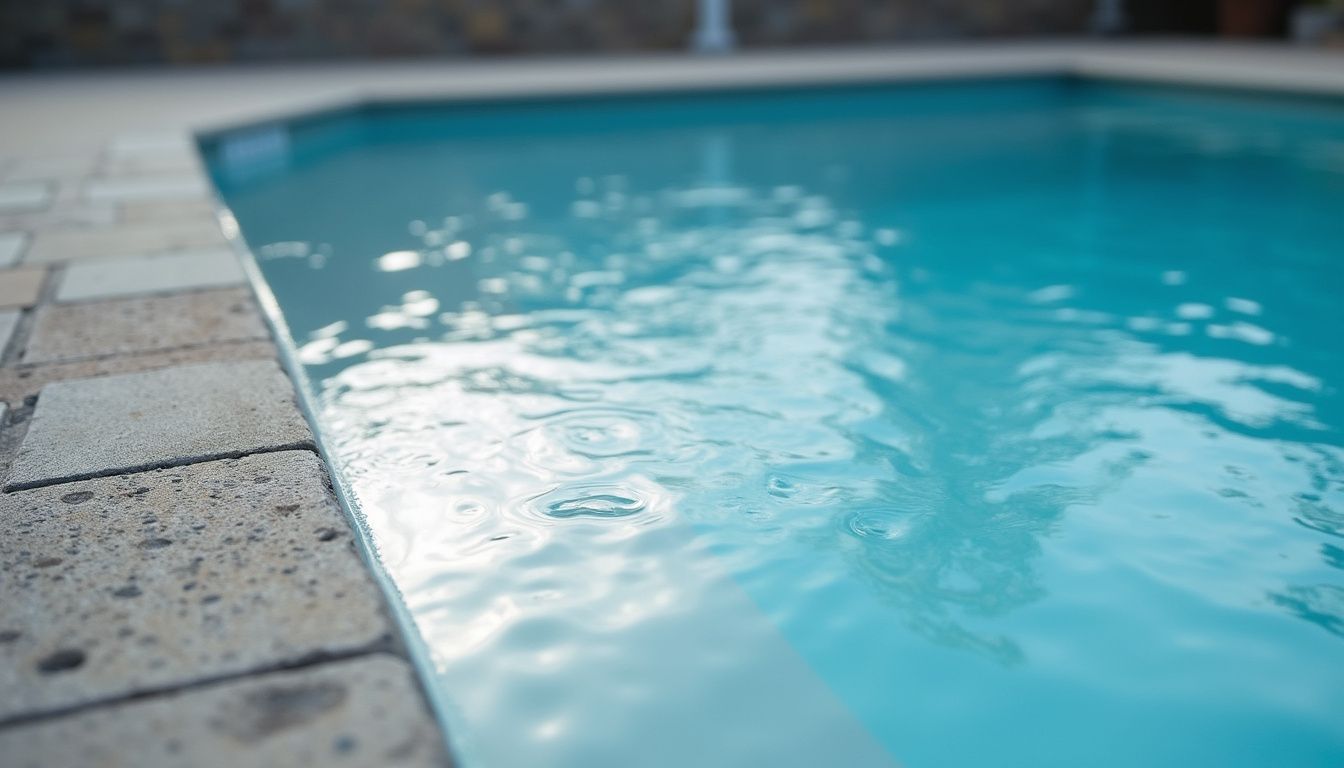
Have you ever picked the perfect pool finish, watched the water go in, and thought, “That looks nothing like what I chose”?
It is one of the most common surprises for new pool owners. Here is what is actually happening: water acts like a filter that bends light, absorbs certain wavelengths, and changes what your eyes actually see.
That finish sample you approved in the showroom? It will look noticeably different once the water fills up. There are real, specific reasons for that shift.
Why Pool Water Changes the Appearance of Pool Finishes
Light transmission is the first thing to understand. When water fills your pool, it does not just sit there. It acts as a filter, absorbing some wavelengths of light while reflecting others back to your eyes.
The water sits on top of your finish and creates layers that bend and scatter light in different directions. Sunlight filtering through those layers changes how your eyes read the original color of the finish below.
Water depth makes this effect even stronger. Shallow areas show the true finish color fairly well, but deeper sections absorb more light. This makes the finish look darker and more muted the deeper you go.
Chemistry and Your Surroundings
Your water chemistry plays a role too. Chlorine and other chemicals can shift how light reflects off the finish, making the color appear brighter or duller depending on your water balance.
Things like algae growth, mineral deposits, or oxidation on the finish can create discoloration that changes the overall water color. Keeping your water clean and properly balanced helps keep the color consistent over time.
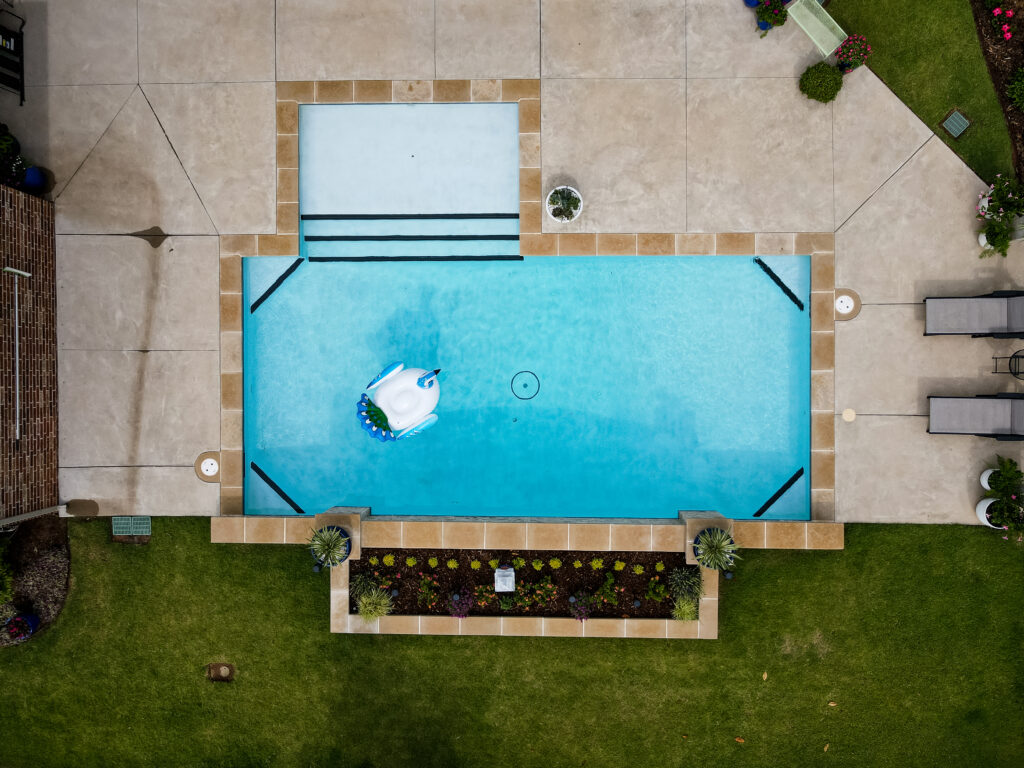
The environment around your pool matters as well. Ripples from surface tension scatter light across the finish and add movement and variation to the color.
How Pool Finish Color Influences the Overall Water Color
Your pool finish color is the foundation for the water color you see every day. Think of it like a canvas: the water acts as a transparent layer sitting on top, and your eyes read both together as one combined color.
The Science Behind Finish Color and Water Tone
Water naturally absorbs red light and scatters blue light, a phenomenon known as Rayleigh scattering. This means your finish color does not simply show through the water. It optically mixes with the water’s natural blue bias.
| Finish Color | Expected Water Color |
| Bright White | Classic clear blue |
| Light Gray | Cool blue-gray |
| Tan or Sand | Teal or bright green |
| Dark Blue or Black | Deep navy or midnight blue |
Light, Depth, and Long-Term Maintenance
Light-colored finishes allow more light transmission, which brightens the water and makes it feel open and inviting. Darker finishes reduce that transmission, so the water takes on a richer, more dramatic tone.
Finish quality also makes a difference over time. Higher quality finishes hold their color better and resist oxidation, which helps keep the water color closer to what you originally planned for.
Conclusion
Your pool’s color transformation makes a lot more sense once you understand the forces behind it. Water, light, and your finish all work together to create what you see.
Light transmission through the water column changes how your eyes read the finish below. Water depth, water chemistry, and your surrounding environment each add their own layer to that final color.
Now that you know what causes the shift, you can plan around it from the very start. Use our water color selector tool and see what the water color would look like for each ecoFINISH coating.
