Find an Installer

Blog
June 8, 2026
How Often Should You Really Resurface a Pool?
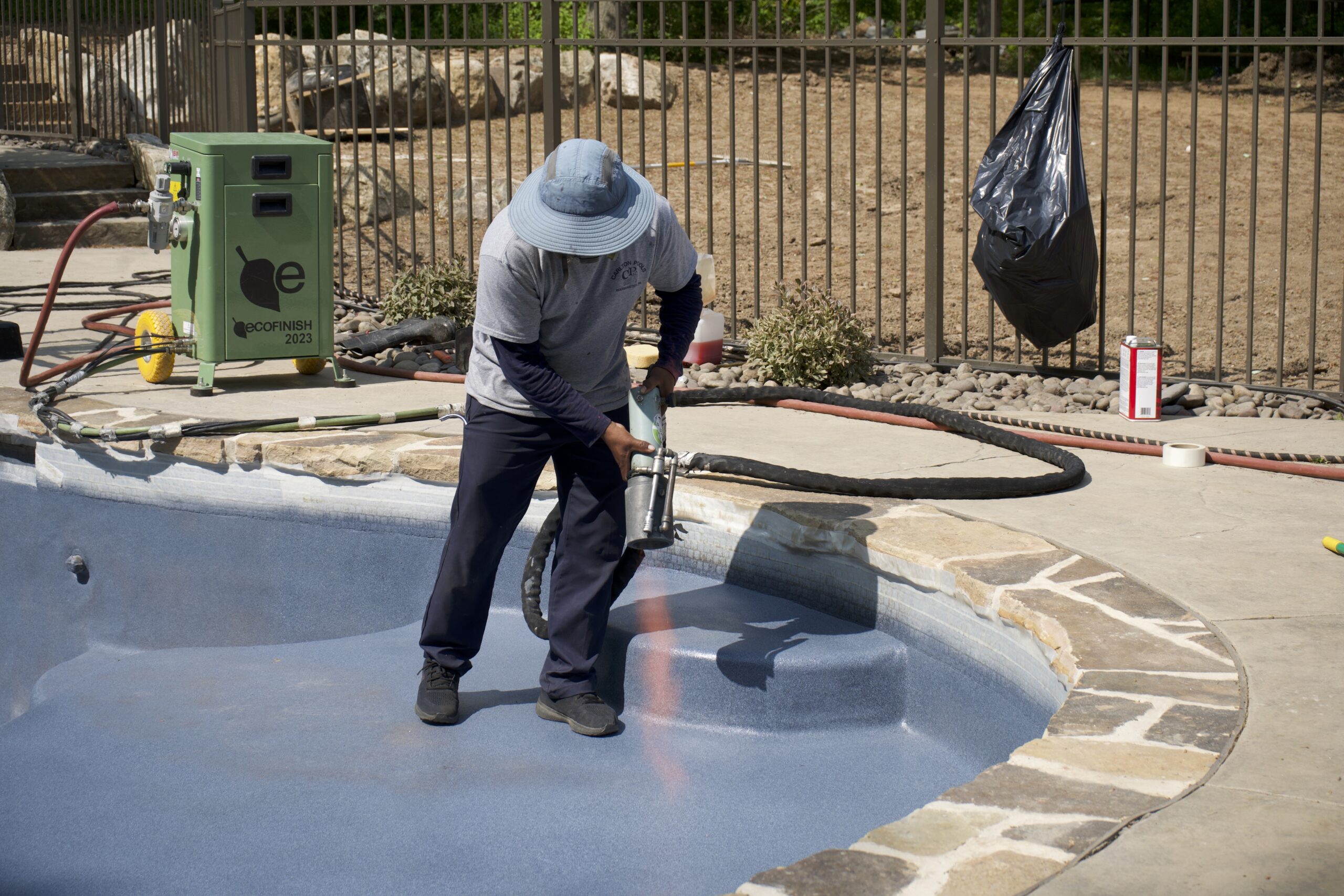
For most swimming pools, resurfacing comes around every 7 to 10 years. That timeline shifts quite a bit based on the materials used and how well you care for it.
This guide walks you through what actually drives your resurfacing schedule, what warning signs to watch for, and the simple steps to get more life out of your pool surface.
What Determines How Often a Pool Needs Resurfacing
A few key factors shape your pool maintenance schedule. The type of surface material is a big one. Plaster finishes typically need attention every 7 to 10 years, while ecoFINISH, quartz, and pebble finishes can stretch even further.
Visible signs like staining, rough patches, algae growth, and structural cracks tell you that inspection and potential repair work should happen soon. Families with kids or those who host frequent gatherings may need resurfacing sooner than casual swimmers.
Drainage problems and structural issues under the surface can force earlier pool renovation work. That’s why a professional inspection is so valuable for understanding your pool’s specific longevity needs.
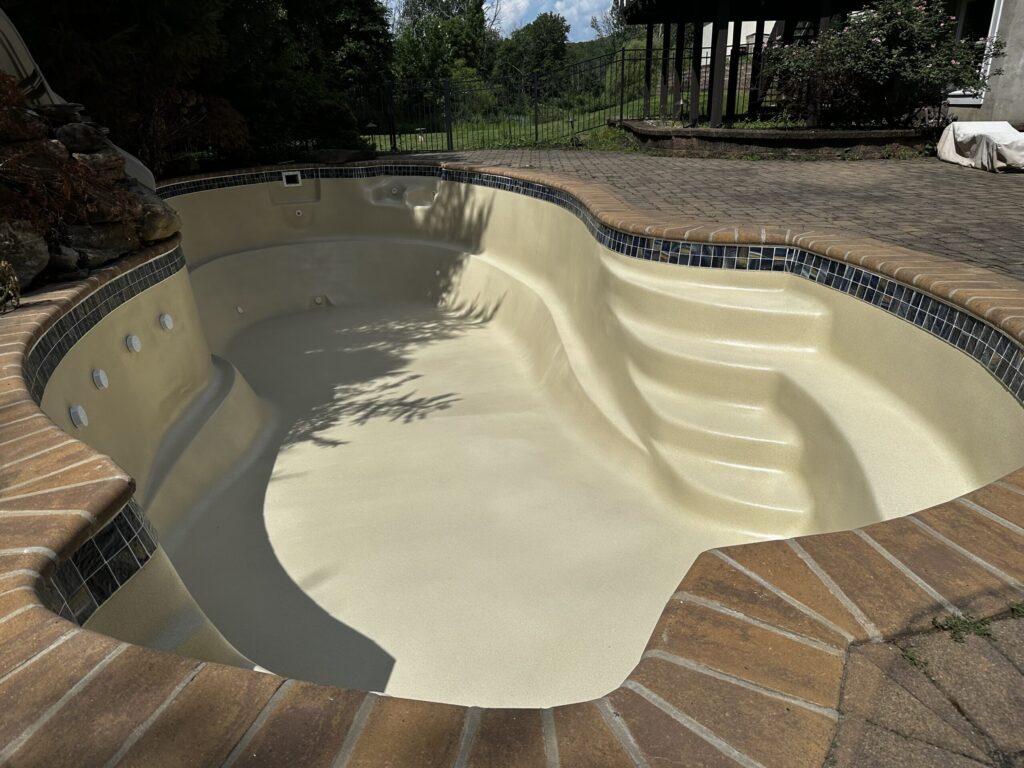
How Often Should You Resurface a Pool
The real timetable for pool resurfacing depends on what your pool is made of and how well it’s been maintained. The good news is there are clear patterns you can plan around.
| Pool Type | Resurfacing Frequency | Key Indicators |
| Plaster Surfaces | Every 7 to 10 years | Algae growth, discoloration, rough texture, leaks form |
| Fiberglass Pools | Every 15 to 20 years | Fading color, gel coat damage, small cracks emerge |
| Vinyl-Lined Pools | Every 5 to 9 years | Tears appear, wrinkles form, fading occurs, punctures develop |
| Painted Pools | Every 1 to 4 years | Paint peels, blistering starts, color fades noticeably |
How Maintenance and Climate Shape Your Timeline
Chlorine levels and pH balance directly impact how quickly surfaces wear down. High chlorine concentrations accelerate plaster erosion. Improper pH causes calcium buildup that damages pool finishes over time.
Your climate zone matters too. Cold regions see freeze-thaw cycles that crack concrete and damage plaster. Hot, dry climates break down vinyl through constant sun exposure.
Humid areas promote faster algae growth and chemical imbalances. Hard water regions develop scale buildup more quickly than soft water areas. Knowing your local conditions helps you set a realistic pool care and inspection schedule.
Conclusion
Your pool’s lifespan comes down to three things: the materials you chose, the maintenance you stay on top of, and the climate you live in.
Regular inspection catches small problems early, before they turn into expensive repairs. Keep up with your pool care routine, check your surface treatment regularly, and you’ll enjoy a beautiful swimming pool for many years to come.
Start planning your resurfacing schedule today. Your pool will reward you with clear water and a surface that looks great season after season.
