Find an Installer

Blog
August 5, 2025
Why Pool Paint Fails on Fiberglass (And What to Do Instead)
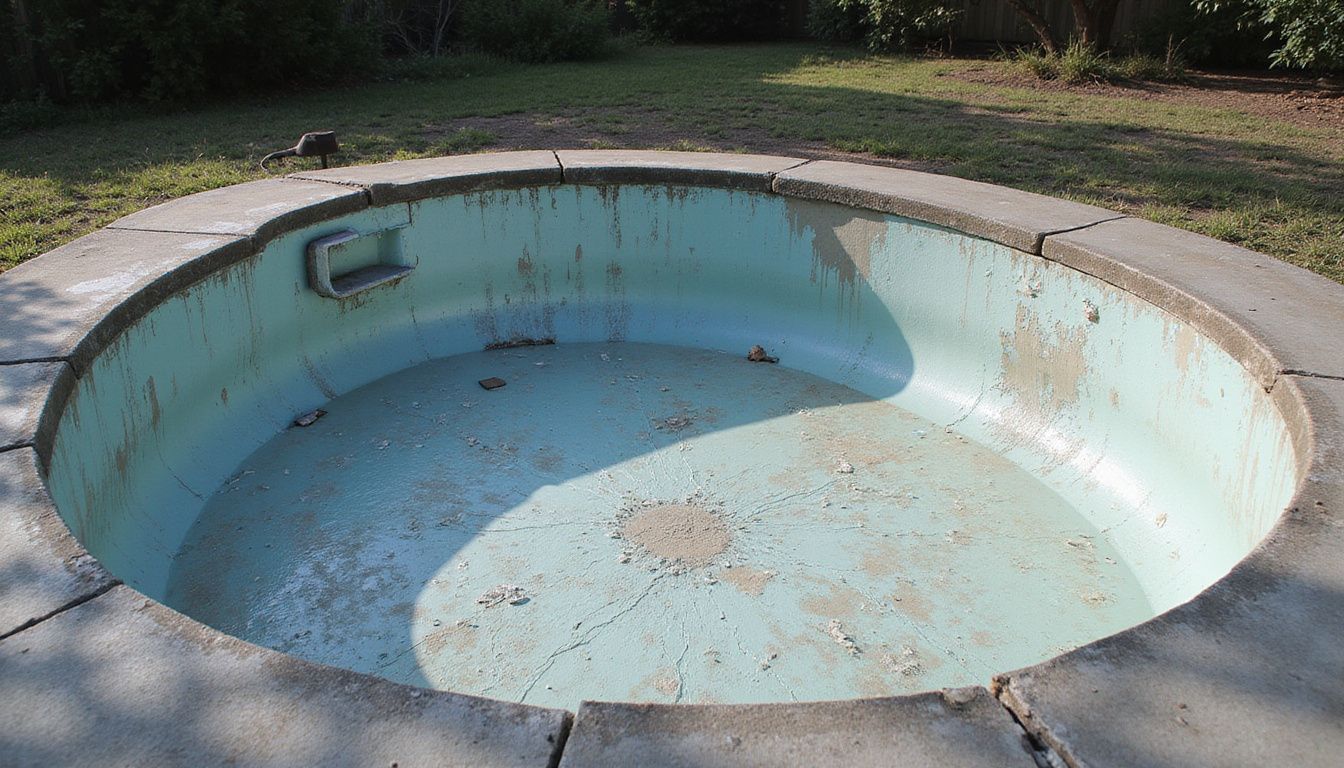
Pool owners often watch their freshly painted fiberglass pools turn into a peeling, flaking mess within just a few years. Traditional pool paint simply wasn’t designed to bond properly with the smooth gel coat surface that covers most fiberglass pools.
This guide reveals why coating failure happens so quickly on fiberglass surfaces and presents a superior alternative that eliminates the endless cycle of repainting and repair. The solution might surprise pool owners who’ve been stuck in this costly maintenance loop.
Why Pool Paint Fails on Fiberglass
Pool paint seems like an easy fix for aging fiberglass pools, but this coating method creates more problems than it solves. Most pool owners discover that paint simply doesn’t bond properly with fiberglass surfaces, leading to frustrating failures that require expensive repairs and constant maintenance.
Poor Adhesion to Gelcoat
Gel coat creates a smooth, non-porous surface that makes paint adhesion extremely difficult. This slick surface acts like a barrier that prevents paint from forming a strong mechanical bond with the fiberglass underneath.
Paint manufacturers often recommend acid etching or sanding to create surface roughness before application. Even with proper surface preparation, the bond between paint and gel coat remains weak compared to other pool surfaces.
The fundamental problem with painting over gel coat is that you’re trying to make two incompatible materials work together long-term in a harsh aquatic environment.
UV Breakdown and Fading
Pool paint faces constant attack from ultraviolet rays that beat down on fiberglass surfaces every day. These powerful rays break down the chemical bonds in paint molecules, causing the coating to deteriorate rapidly.
Standard pool paints simply cannot withstand this relentless UV exposure, leading to visible fading within just one or two seasons. The gel coat underneath offers no protection against this process, leaving the paint vulnerable to complete breakdown.
Chemical Erosion
Pool chemicals eat away at paint layers on fiberglass surfaces over time. Chlorine and other sanitizers break down paint molecules, creating weak spots that lead to coating failure.
The gel coat underneath fiberglass pools already faces constant chemical exposure, and adding paint creates another vulnerable layer. Bromine, pH adjusters, and shock treatments accelerate this chemical erosion process.
Standard pool paints lack the chemical resistance necessary for long-term durability in swimming pool environments.
Moisture Trapped Beneath the Paint
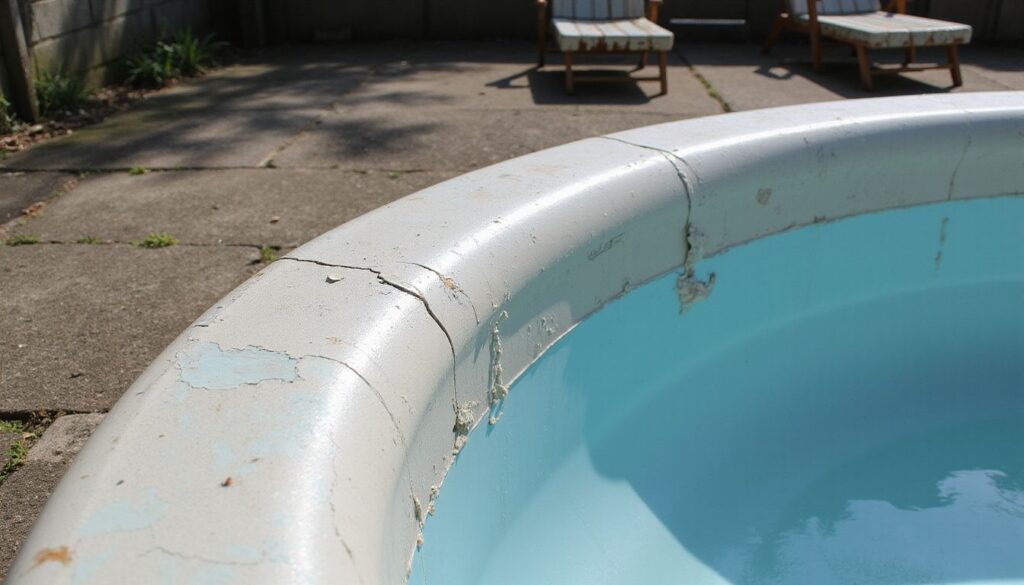
Water molecules penetrate through microscopic pores in the paint film and reach the gel coat surface underneath. This trapped moisture creates hydrostatic pressure that pushes against the paint from below. The constant wet-dry cycles cause the paint to lift and separate from the fiberglass surface.
Osmosis becomes a major problem as water continues to accumulate between the paint and gel coat layers. The moisture creates blisters and bubbles that weaken the coating’s bond to the surface. These coating failure issues lead directly to the visible consequences that frustrate pool owners.
The Consequences of Paint Failure
When pool paint starts failing on fiberglass surfaces, pool owners face a cascade of expensive and frustrating problems that can turn their backyard oasis into a maintenance nightmare.
Peeling and Flaking
Peeling and flaking represent the most visible signs of coating failure on fiberglass pools. Paint loses its grip on the gel coat surface, creating unsightly patches that chip away piece by piece.
Pool owners often notice small bubbles forming first, which then burst and leave behind exposed areas. These damaged spots grow larger over time, creating an uneven, patchy appearance that makes the pool look neglected and worn.
The exposed fiberglass underneath becomes vulnerable to chemical damage and UV rays, leading to spider cracks and further deterioration.
Chalking and Discoloration
Chalking creates a powdery white residue that forms on painted fiberglass surfaces. This coating failure happens as the paint breaks down under constant exposure to pool chemicals and UV rays.
Discoloration follows closely behind chalking in the paint degradation process. Fiberglass surfaces lose their original color as chemical erosion takes its toll. Bright blues fade to pale gray, while other colors develop uneven patches and streaks.
Repeated Repainting Costs
Pool owners face mounting expenses when paint fails repeatedly on fiberglass surfaces. Traditional pool paint requires reapplication every two to three years, creating an expensive maintenance cycle that drains budgets.
Each coating failure demands surface preparation, primer application, and multiple paint coats, with labor costs often exceeding material expenses.
These recurring renovation costs accumulate rapidly, making paint an expensive choice for fiberglass pool maintenance over time.
What to Do Instead: Use ecoFINISH
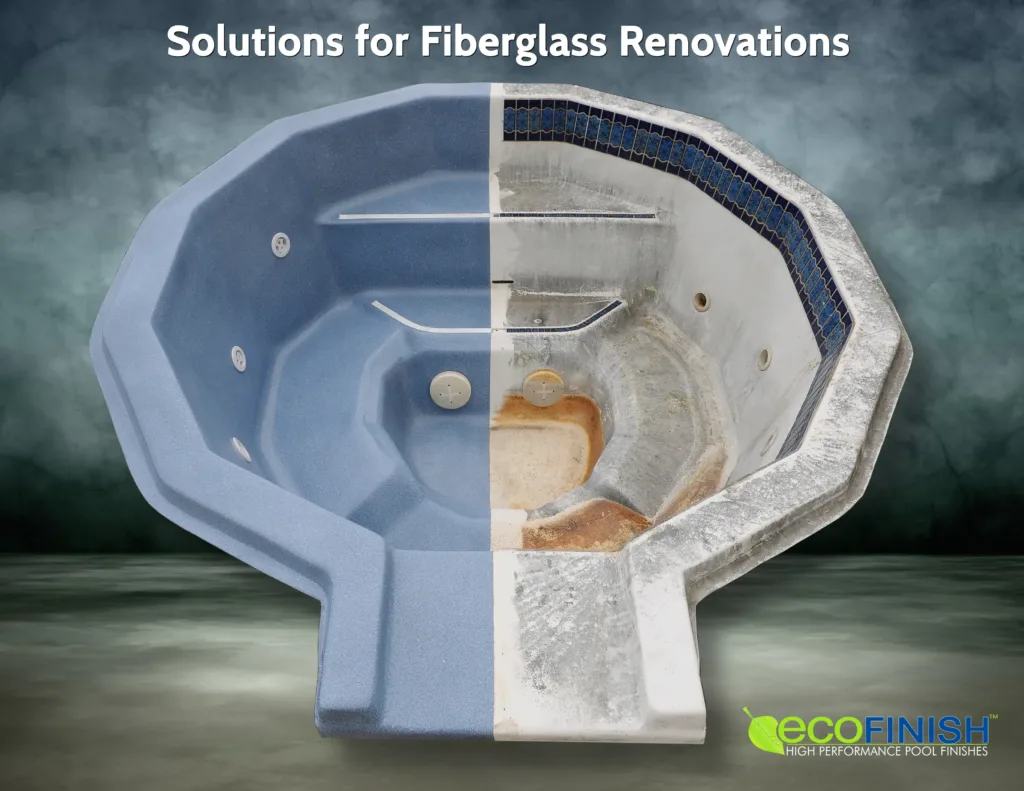
Pool owners need a solution that works specifically with fiberglass surfaces instead of fighting against them. ecoFINISH provides a coating system called polyFIBRO that bonds directly to fiberglass pools without the adhesion problems that plague traditional pool paint.
Engineered for Fiberglass
Traditional pool paint creates problems on fiberglass surfaces because manufacturers design these coatings for concrete and plaster applications. ecoFINISH takes a different approach with polyFIBRO by creating a product specifically for fiberglass pool surfaces and gel coat conditions.
The process focuses on creating a finish that bonds directly with fiberglass materials rather than fighting against them. Standard paint products lack the chemical compatibility needed for long-term fiberglass pool maintenance, which leads to coating failure and frequent repair needs.
Long-Lasting, UV-Stable, Chemical-Resistant
Beyond its specialized engineering for fiberglass surfaces, ecoFINISH delivers exceptional durability that traditional pool paint simply cannot match. This advanced coating system resists UV breakdown, maintaining its original color and finish without the fading that plagues conventional paint options.
Pool owners discover that polyFIBRO withstands constant sun exposure while preserving its vibrant appearance year after year. The coating also stands up to chlorine, salt water, and other pool chemicals without deteriorating or requiring frequent touch-ups.
No Peeling, No Chalking
ecoFINISH creates a surface that stays intact for years without the common problems that plague traditional pool paint. This advanced coating bonds directly to fiberglass surfaces, eliminating the peeling and flaking issues that force pool owners into costly repair cycles.
Pool owners who choose polyFIBRO avoid the frustrating maintenance cycle of scraping, sanding, and repainting that comes with conventional coatings. The finish maintains its smooth appearance and structural integrity even under constant exposure to pool chemicals and UV radiation.
Conclusion
Pool paint simply doesn’t work well on fiberglass surfaces, and homeowners discover this truth the hard way through peeling, fading, and constant maintenance headaches. Smart pool owners skip the paint trap and choose ecoFINISH for their fiberglass pool renovation needs.
This engineered coating bonds properly to gel coat surfaces and resists UV breakdown, chemical erosion, and moisture damage that destroys traditional paint. Pool maintenance becomes easier, repair costs drop significantly, and the surface stays beautiful for years without chalking or coating failure.
