Find an Installer
Blog
July 31, 2025
How To Stop Erosion In Aging Fiberglass Pools
Aging fiberglass pools often develop erosion problems that leave pool owners frustrated and searching for lasting solutions. Fiberglass pool surfaces can deteriorate over time due to chemical imbalance, UV exposure, and normal wear that causes the gel coat to break down.
This guide explores how polyFIBRO provides a permanent coating solution that stops erosion and restores aging fiberglass pools to like-new condition. Discover why this finish outperforms traditional repair methods.
What Causes Erosion in Fiberglass Pools?
Fiberglass pools face several challenges that lead to surface erosion over time. Pool owners often notice their once-smooth surfaces becoming rough, stained, or damaged as years pass.
Chemical Imbalance
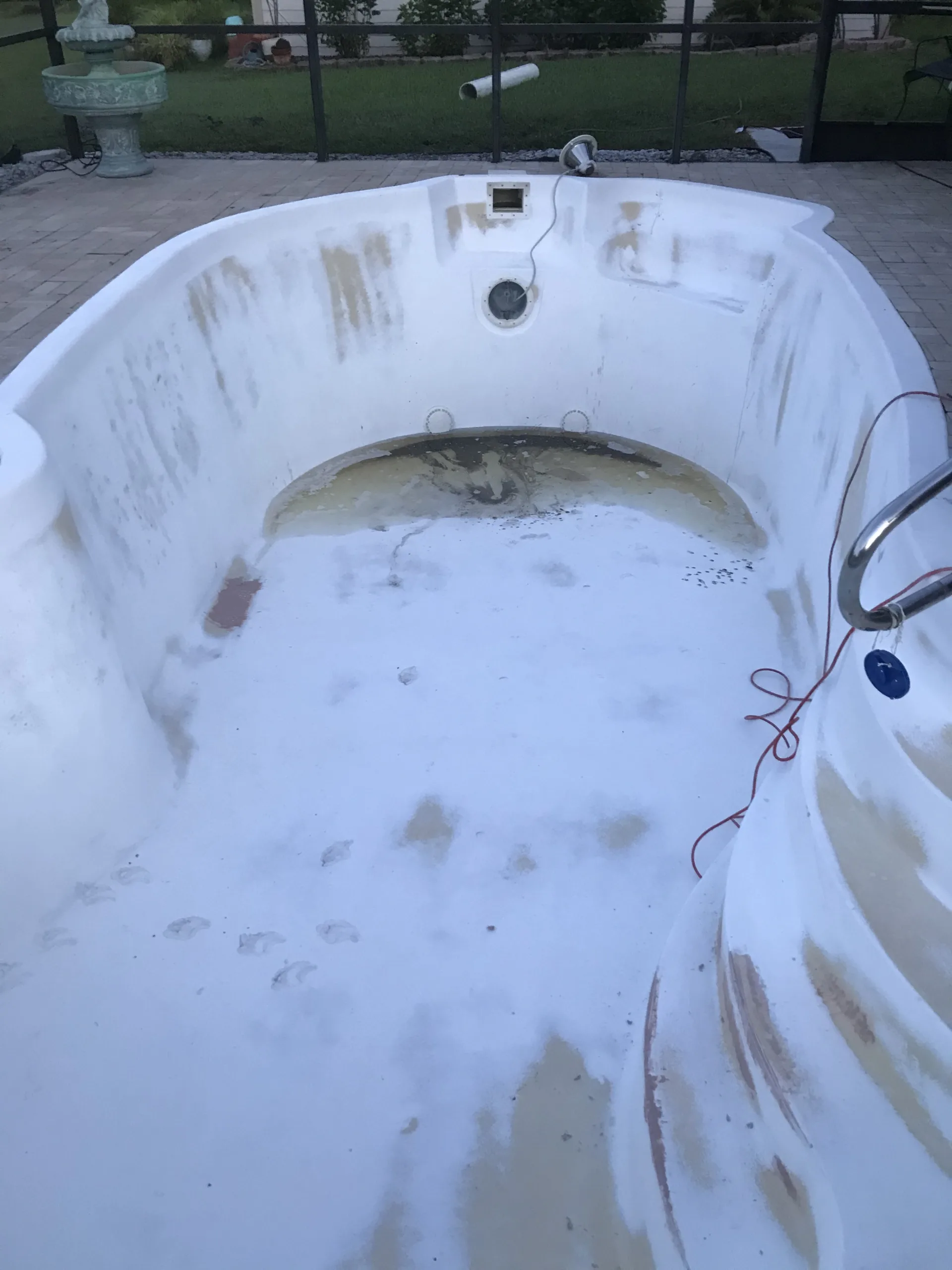
Chemical imbalance creates one of the biggest threats to fiberglass pool surfaces. Pool water with improper pH levels eats away at the gel coat that protects the underlying fiberglass structure.
Low pH turns water acidic, which dissolves the protective coating and exposes the raw fiberglass underneath. High pH levels cause scaling and mineral buildup that damages the smooth finish over time.
Chlorine levels that stay too high for extended periods also contribute to surface erosion. The harsh chemicals break down the gel coat’s molecular structure, creating tiny pits and rough spots where algae and bacteria can hide.
UV Exposure
The sun’s ultraviolet rays act like a slow poison for fiberglass pool surfaces. These powerful rays break down the gel coat that protects the pool’s structure, causing it to become chalky and brittle over time.
Pool owners often notice their once-smooth surfaces developing a rough, sandpaper-like texture after years of UV exposure. This degradation creates tiny pockets where algae and bacteria can hide, making pool maintenance much harder.
UV damage accelerates erosion prevention needs by weakening the fiberglass material itself. The protective gel coat fades and loses its waterproof properties, allowing water to seep into microscopic cracks.
Age and Wear
Time takes its toll on every fiberglass pool surface. Years of constant water exposure cause the gel coat to break down at a molecular level, creating microscopic cracks that expand over time.
Pool owners notice their once-smooth surfaces becoming rough and pitted, especially around the waterline where chemical exposure peaks.
Older fiberglass pools develop a chalky appearance as the protective gel coat wears thin. This aging process accelerates erosion prevention challenges and creates perfect conditions for algae growth.
The original waterproof finish loses its effectiveness, allowing water to penetrate deeper into the fiberglass substrate and causing further deterioration that standard maintenance cannot reverse.
Temporary Fixes vs Permanent Solutions
Most pool owners try quick fixes like paint or patches when they notice erosion in their fiberglass pools. These temporary solutions might look good at first, but they create bigger problems down the road and cost more money in the long run.
Short-Term Fixes (And Why They Don’t Last)
Many pool owners try quick fixes to stop erosion in their aging fiberglass pools. These temporary solutions often fail within months and create bigger problems down the road.
- Pool paint application – Standard pool paint peels off fiberglass surfaces because it cannot bond properly to the smooth gel coat. Most paint jobs last only 1-2 years before chipping starts.
- Epoxy primer coatings – These primers provide better adhesion than regular paint but still crack under constant water pressure. Temperature changes cause the coating to expand and contract, leading to failure.
- Gel coat repair patches – Small patches work for tiny cracks but create uneven surfaces that collect dirt and algae. The patches rarely match the original color and become visible eyesores.
- Surface sanding treatments – Rough sanding gives paint better grip but damages the fiberglass structure underneath. This process actually accelerates erosion by exposing more fiberglass to chemicals.
- Vinyl liner installation – Installing a liner over damaged fiberglass hides problems temporarily but traps moisture between layers. The trapped water continues eroding the fiberglass beneath the liner.
- Chemical balance adjustments – Balancing pool chemicals helps slow erosion but cannot reverse existing damage to the fiberglass surface. Proper chemistry prevents future damage but offers no surface repair.
- Fiberglass patching compounds – These compounds fill holes and cracks but shrink over time as they cure. The patches often pop out during freeze-thaw cycles or heavy pool usage.
- Textured spray coatings – Spray-on textures improve grip but wear away quickly from pool brushing and cleaning. The rough texture actually makes the pool harder to clean and maintain.
How polyFIBRO Stops Fiberglass Pool Erosion
polyFIBRO, a coating from ecoFINISH, creates a barrier that stops erosion at its source by bonding directly to the fiberglass surface. This advanced coating system transforms aging pools into durable surfaces that resist chemical damage and UV exposure for decades.
What is polyFIBRO?
polyFIBRO represents a revolutionary aquatic coating system that transforms aging fiberglass pools through advanced polymer technology. This innovative finish creates a durable, non-porous surface that bonds directly to existing fiberglass without requiring complete pool replacement.
The coating system delivers exceptional longevity enhancement compared to traditional pool resurfacing methods. Professional installers apply this protective finish using specialized techniques that ensure proper adhesion and a smooth finish.
Benefits of ecoFINISH for Fiberglass
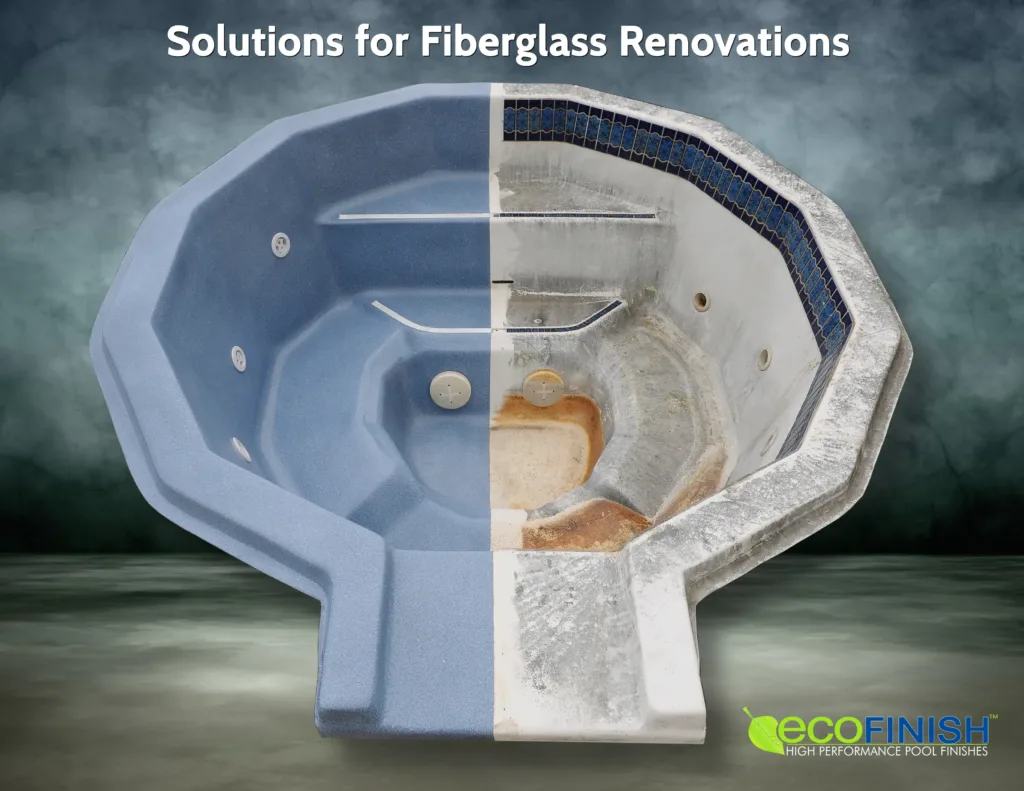
ecoFINISH delivers superior protection that transforms aging fiberglass pools into durable, long-lasting surfaces. This innovative coating system provides multiple advantages that address common fiberglass pool problems.
- Creates a waterproof finish that prevents moisture penetration.
- Eliminates stain resistance issues that plague older fiberglass surfaces.
- Delivers cleaning efficiency that reduces maintenance time and chemical usage.
- Offers longevity enhancement that extends pool life.
- Resists algaecides and other pool chemicals that typically damage fiberglass surfaces.
- Creates a smooth finish that feels comfortable underfoot and prevents cuts or scrapes.
Conclusion
Aging fiberglass pools don’t have to become constant headaches for pool owners. ecoFINISH provides a permanent solution that stops erosion while creating a beautiful, durable surface.
This eco-friendly coating eliminates the need for repeated repairs and costly maintenance cycles. Professional installation ensures the waterproof finish performs as designed, giving pool owners decades of worry-free enjoyment.
Smart pool owners choose ecoFINISH to transform their aging pools into stunning backyard centerpieces that resist stains, algae, and wear.
